
Ministry of Youth and Sports Concludes Stakeholder Workshop to Strengthen National Youth Peace and Security Action Plan
Ministry of Youth and Sports Concludes Stakeholder Workshop to Strengthen National Youth Peace and Security Action Plan
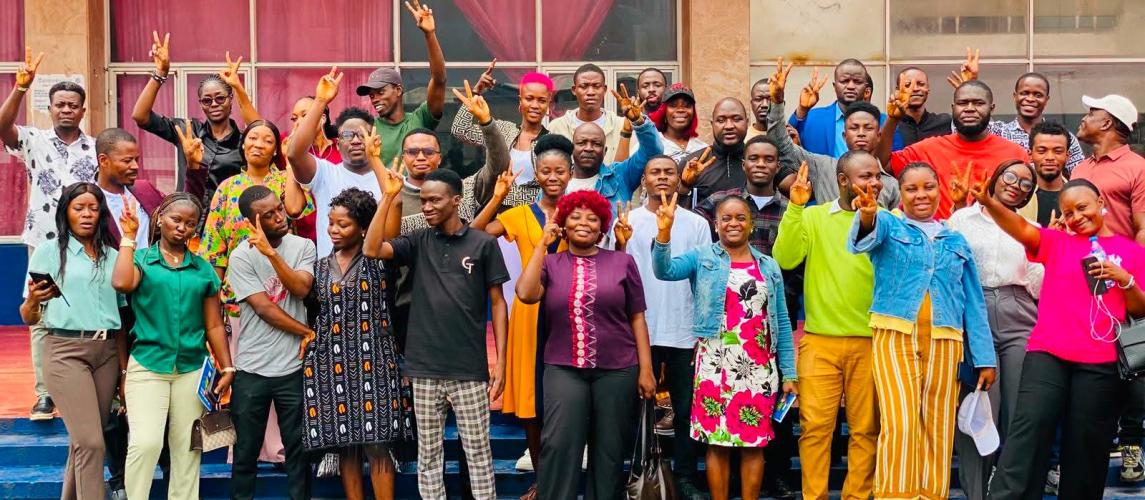
The Ministry of Youth and Sports , through its Adolescent Sexual and Reproductive Health (ASRH) Program, yesterday July 15, 2026 concluded a two-day consultative stakeholder workshop aimed at strengthening the implementation of Liberia's National Youth Peace and Security (YPS) Policy and its National Action Plan (2025–2029). The workshop brought together key stakeholders and was supported by the United Nations Population Fund (UNFPA).
Speaking at the closing ceremony, the Acting Deputy Minister for Youth Development, F. Alphonso Y. Belleh, said the consultation was intended to ensure that the National Action Plan reflects the priorities and contributions of all stakeholders, thereby enhancing coordinated implementation.
"The active participation demonstrated over the past two days reflects a shared commitment to transforming this policy from a document into meaningful action. The operational framework we have developed will serve as a practical guide for implementing the National Action Plan while ensuring that every stakeholder plays a meaningful role," Belleh said.
He noted that Liberia adopted two landmark youth policy instruments in 2025—the National Youth Policy (2025–2029) and the National Policy on Youth Peace and Security, together with its National Action Plan (2025–2029). While implementation of the National Youth Policy is already progressing through nationwide validation and regional dissemination, the Ministry is now intensifying efforts to operationalize the Youth Peace and Security Action Plan.
Belleh disclosed that the Ministry plans to simplify the current 98-page National Action Plan into a concise 24- to 25-page user-friendly version without altering its substance. The simplified edition will make the document more accessible to young people, communities, civil society organizations, and implementing partners.
According to him, the simplified version will also support nationwide awareness and dissemination efforts while strengthening collaboration with development partners, including UNFPA, donor institutions, and local consultants, to promote broader understanding and ownership of the policy.
The Acting Deputy Minister emphasized that the successful implementation of the Youth Peace and Security agenda is a collective responsibility that extends beyond the Ministry of Youth and Sports. He noted that government ministries and agencies, civil society organizations, youth groups, development partners, and other stakeholders all have clearly defined responsibilities under the policy framework.
He encouraged participating institutions to carefully review the policy, identify the thematic areas assigned to them, and begin mobilizing resources to fulfill their commitments. Belleh further pledged the Ministry's support in helping stakeholders identify funding opportunities where resource gaps exist.
Highlighting the role of youth-led institutions, Belleh commended the Mano River Union Youth Parliament (MRU-YP) for prioritizing Youth Peace and Security activities within its 2025 operational plan and expressed confidence that the organization would continue to provide leadership in advancing the policy's implementation.
Meanwhile, Theophilus Gippley, a facilitator from the Center for Media Studies and Peace Building (CEMEPS), explained that the consultation focused on assessing the implementation status of the National Action Plan, strengthening coordination among stakeholders, and validating a draft implementation roadmap.
He said the workshop culminated in the development of a comprehensive operational framework that outlines key activities, implementation timelines, lead institutions, and partner responsibilities to guide the effective execution of the National Youth Peace and Security Action Plan over the next several years.
Among the statutory youth organizations represented at the workshop were the Federation of Liberian Youth (FLY), the Liberia National Students Union (LINSU), and the Mano River Union Youth Parliament (MRU-YP), along with representatives from government institutions, civil society organizations, and development partners committed to advancing Liberia's youth peace and security agenda.
